Invisalign vs. Traditional Braces: Which Fits You?
Both options can create a straighter smile. The better choice depends on your bite, your lifestyle, and how much discipline you want to commit.
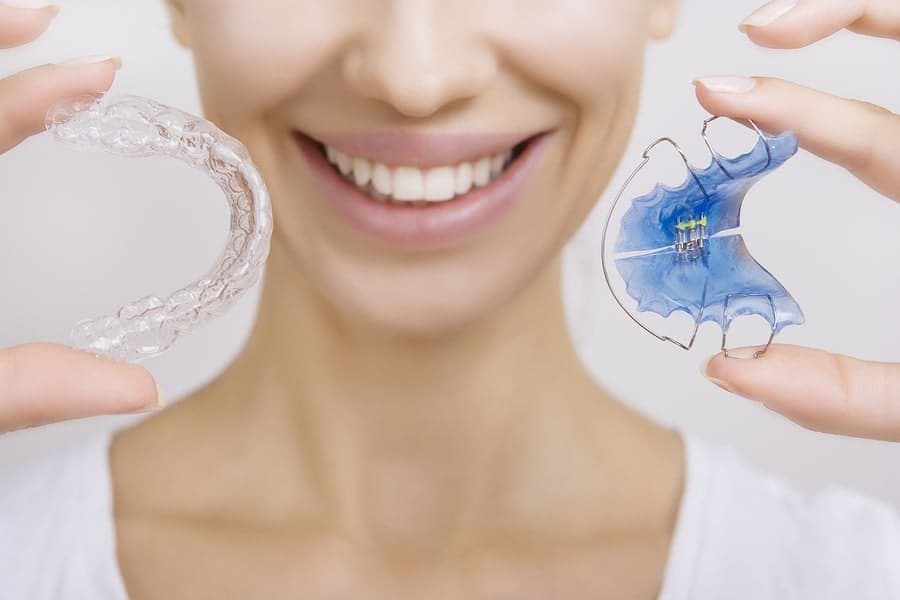
Straight teeth are easier to clean and can make a bite more comfortable, not just a smile more attractive. Today, the two most common ways to get there are clear aligners like Invisalign and traditional braces. Both work well; the right one depends on your situation.
How Each Works
Invisalign uses a series of custom clear trays, each slightly different from the last, that gradually move teeth into place. You switch to a new set every week or two. Traditional braces use brackets bonded to the teeth and a wire that is adjusted periodically to guide movement.
Appearance
Aligners are nearly invisible, which appeals to many adults and teens. Braces are more noticeable, though ceramic tooth-colored brackets are an option.
Comfort and Daily Life
Aligners are smooth and removable, so you can eat whatever you like and brush and floss normally. Braces can irritate cheeks at first, and some foods, such as popcorn, hard candy, and sticky snacks, are off limits.
Commitment
Aligners only work when you wear them, typically 20 to 22 hours a day. If you are likely to forget, braces remove that variable because they are always working.
Complexity of the Case
Invisalign handles a wide range of crowding, spacing, and bite issues. Some complex rotations or significant bite corrections may still be better suited to braces. An evaluation is the only way to know for sure.
Which Is Right for You?
If you want a discreet option, are comfortable with the daily routine, and have a case that suits aligners, Invisalign is often a great fit. We can scan your teeth and show you a preview of your projected result. Learn more about Invisalign at our Leesburg office or book a consultation.